
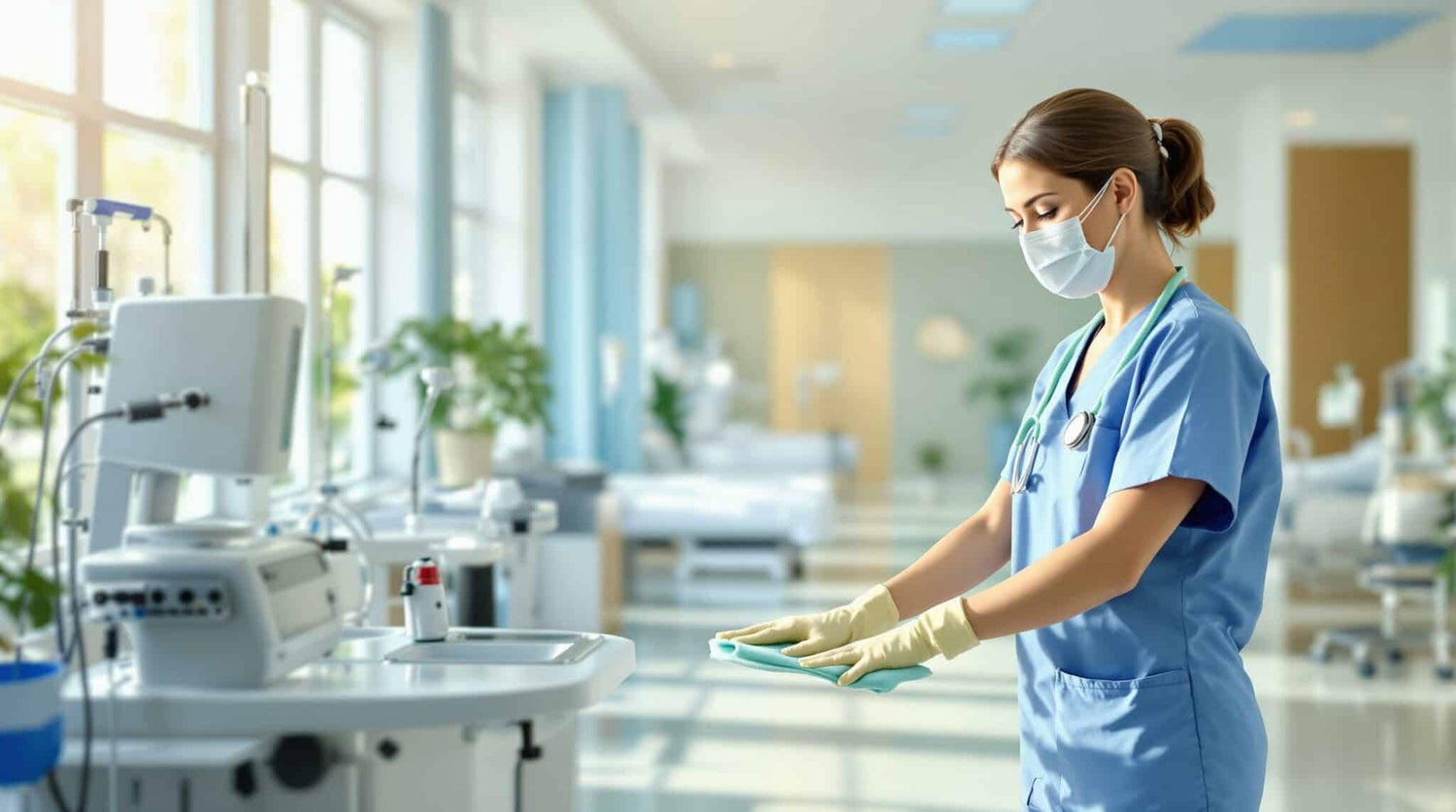
7 Essential Hygiene Standards for Care Facilities
Hygiene is the key to safety in care facilities, for residents, staff and the quality of care alike. Here are the 7 core hygiene standards that every facility must implement:
Popular testing options include Hartmann peha-soft Latex Comfort Examination Gloves, Latex Gloves, 1 Pack = 100 Pieces, Hasemed Dingcheng FFP2 Maske, MHD 08/27, CE 5098, weiß, 1 Packung = 40 Masken.
- Hand Hygiene: Thorough washing and disinfection of hands to reduce germs.
- Surface Cleaning and Disinfection: Regular cleaning of door handles, bedside tables and sanitary facilities.
- Waste Management: Safe disposal of medical and infectious waste.
- Personal Protective Equipment (PPE): Use of gloves, masks and protective gowns.
- Staff Training: Regular training on compliance with hygiene standards.
- Monitoring: Verification of measures by hygiene specialists.
- Documentation: Complete and continuous record-keeping of all hygiene measures.
Why is this important? These standards minimise infection risks, protect against multidrug-resistant germs and ensure a safe environment. Consistent implementation of these measures is not only required by law, but also essential for the trust of residents and their relatives.
Read on to find out how these standards can be implemented in everyday practice.
Important 2026: Since January 2026, new requirements under TRBA 250 have applied, including updated protective equipment guidelines and safety standards for wet areas. This article covers the proven basic standards that continue to apply.
Basic hygiene: routes of transmission
1. Hand Hygiene: Keeping Germs in Check
Hand hygiene is the basis of all hygiene measures in care facilities. It helps to effectively minimize the spread of germs and pathogens.
1.1 How to Wash Your Hands Properly
Hands should be washed thoroughly under running water with liquid soap, rinsed and dried with a disposable towel. This process should take at least 40 seconds to be effective.
1.2 Performing Hand Disinfection Correctly
Hand disinfectants with an alcohol content of at least 60% and skin-friendly additives are optimal. It is important that the product is allowed to take effect for 30 seconds. Products such as Sterillium are often recommended, as they are both skin-friendly and effective against a wide range of pathogens.
1.3 Using Gloves Correctly
Gloves should always be worn when there is contact with body fluids, wounds or contaminated material. After each use, they must be disposed of, followed by thorough hand disinfection.
Typical Mistakes in Hand Hygiene:
- Exposure time of the disinfectant is too short
- Hands are not completely wetted
- Jewelry or artificial fingernails interfere with hygiene
- Disposable gloves are used more than once
To implement hand hygiene in everyday practice, regular training for staff and disinfectant dispensers at strategic locations in the facility are crucial.
In addition to hand hygiene, cleaning and disinfecting surfaces is also an important part of infection control.
2. Cleaning and Disinfection of Surfaces and Equipment
Cleaning and disinfection of surfaces and equipment is crucial to prevent the spread of pathogens. Only through a systematic approach can chains of infection be effectively broken.
2.1 Surfaces with High Touch Frequency
Some surfaces require particular attention because they are frequently touched by multiple people. Here is an overview:
| Area | Frequency and Requirements |
|---|---|
| Door handles and light switches | At least twice daily, use fast-drying agents |
| Bed rails and bedside tables | After each resident contact, use material-friendly agents |
| Sanitary facilities | Three times daily, use agents effective against noroviruses |
| Shared equipment | After each use, use fast-acting disinfectants |
2.2 Selecting the Right Disinfectants
Disinfectants must meet certain requirements: They should be certified by the RKI or the DGHM, act in a material-friendly manner, combat multidrug-resistant bacteria, and be approved for the medical field. One example of a proven product is Sterillium, which offers broad efficacy against various pathogens.
2.3 Effective Disinfection Methods
Before every disinfection, thorough cleaning is essential. Wipe disinfection is particularly effective when the surface is completely wetted and the contact time is observed. Microfiber cloths have proven very helpful in this regard. Cleaning schedules ensure that no measures are overlooked, and regular training ensures that all specifications are correctly implemented.
In outbreaks of infectious diseases such as noroviruses, the disinfection frequency must be increased. Special virucidal disinfectants are required here.
Another important aspect of infection control is the safe disposal of waste to prevent the further spread of pathogens.
3. Waste Management: Handling and Disposal
While cleaning and disinfecting surfaces is crucial to breaking chains of infection, the correct disposal of waste also plays a central role in protection against infections.
3.1 Sorting of Different Types of Waste
| Type of Waste | Container | Special Requirements |
|---|---|---|
| Household Waste | Black Bin | Daily emptying, sealable containers |
| Medical Waste | Yellow Containers | Puncture-proof, UN-certified |
| Infectious Materials | Red Containers | Double-walled, observe hazardous goods regulations |
| Sharps | Needle Boxes | Break-proof, automatic closure |
All waste containers must be clearly labelled and regularly disinfected.
3.2 Staff Training on Waste Disposal
Staff must always wear personal protective equipment when handling waste. Every disposal of hazardous waste must be fully documented. This documentation ensures safety and traceability.
Particular attention is paid to preventing needlestick injuries. Sharp objects must never be placed in normal waste containers. Special needle boxes are mandatory here.
Employees should also be trained in first aid measures for injuries caused by waste and be able to document them.
Hygiene specialists carry out regular inspections of waste disposal. This also includes checking the storage rooms, which must be well ventilated and lockable.
Well-organised waste management combined with personal protective equipment is essential to ensure the safety of staff and residents.
sbb-itb-ff558d6
4. Personal Protective Equipment (PPE): Safety in Care Facilities
Personal protective equipment plays a central role in protecting care staff and residents from the transmission of pathogens. It complements measures such as hand hygiene and waste disposal and ensures a higher level of safety.
4.1 Key PPE Components
The selection of PPE is based on risk assessments. The key components include:
- Disposable gloves: Powder-free and EN 455 certified, ideal for direct contact with residents or body fluids.
- Protective gowns: Fluid-resistant, specifically for activities with an increased risk of contamination.
- Face masks: Standard mask for droplet transmission; FFP2/FFP3 masks in case of increased infection risk.
- Eye protection: Goggles that are anti-fog offer protection against splashes and aerosols.
When caring for residents with multidrug-resistant organisms, particularly strict requirements apply to the use of PPE.
4.2 Correct Donning and Doffing of PPE
Correct handling of PPE is crucial. Donning and doffing should be carried out systematically, with hand disinfection before and after each contact with the PPE being the top priority. Contaminated equipment must be disposed of in specially marked waste containers.
"Training and workplace audits increase compliance with hand disinfection by 30 %".
Important basic rules:
- PPE should be stored dry and protected.
- A supply for at least four weeks must always be available.
- Regular stock and quality checks are essential.
Correct use of PPE is only one component of a comprehensive hygiene concept. Staff training is essential to ensure that all standards are adhered to.
5. Staff Training and Monitoring of Hygiene Practices
Thorough training and consistent monitoring of hygiene practices are essential to ensure safety in care facilities. Targeted measures can improve hygiene standards in the long term.
5.1 Designing Effective Training Programs
A well-designed training program should include several components to combine theory and practice effectively:
| Training Component | Description | Frequency |
|---|---|---|
| Basic and refresher courses | Teaching theoretical fundamentals and updates | On hiring, then every six months |
| Practical exercises | Training on hand disinfection and use of PPE | Quarterly |
| E-learning modules | Self-study and knowledge assessment | Monthly |
5.2 Promoting a Hygiene-Aware Work Culture
A strong hygiene culture emerges when all staff are actively involved. Studies show that the behavior of colleagues and managers significantly influences how well hygiene standards are adhered to.
Steps to promote a hygiene culture:
- Regular feedback and recognition for good behavior
- Clear support from managers
- Transparent communication of hygiene guidelines
A practical example would be the introduction of monthly feedback meetings to discuss and optimize hygiene practices.
"The expectations of supervisors and the perception of good practices by colleagues are crucial factors for high compliance with hand hygiene."
Despite a positive hygiene culture, errors can occur. These should be addressed constructively to achieve lasting improvements.
5.3 Handling Hygiene Violations Properly
A solution-oriented approach to hygiene violations is often more effective than purely disciplinary measures.
Procedure for hygiene violations:
- Documentation of the incident
- Cause analysis and individual coaching
- Regular monitoring of progress
According to statistics, targeted refresher training on specific violations can significantly improve compliance with hygiene regulations.
Regular inspections by trained hygiene specialists are essential. With standardized audit tools, they can objectively assess compliance with regulations and identify opportunities for improvement.
A combination of training, monitoring, and a supportive hygiene culture creates a safe environment for both care recipients and staff.
Conclusion: Ensuring hygiene in everyday practice
Implementing measures such as PPE and training is only the beginning. The crucial part is integrating them into the daily workflow. Hygiene standards are essential for the operation of care facilities. With clear routines, defined responsibilities and a consistent hygiene culture, both residents and staff are protected.
A well-organised approach helps to embed these standards effectively into everyday practice. The seven hygiene practices presented here provide a solid foundation for successful hygiene management.
| Hygiene area | Daily measures | Success factors |
|---|---|---|
| Hand hygiene | Regular disinfection | Sufficient availability of products |
| Surface cleaning | Scheduled cleaning | Documented and reviewed plans |
| Waste management | Careful waste separation | Clear labelling and orderliness |
A strong hygiene culture is based on clearly defined processes and good collaboration. Particularly important are:
- Clear responsibilities and control systems
- Sufficient resources for hygiene materials
- Regular review and adjustment of standards
For hygiene standards to be implemented successfully, everyone involved must understand their role and actively contribute. Continuous monitoring ensures that new challenges can be addressed quickly.
High-quality materials and regular training not only help to reduce infection rates, but also contribute to the satisfaction of residents and staff. By consistently adhering to these standards, care facilities not only meet legal requirements, but also strengthen the trust of residents and their relatives.
FAQs
What are the basics of hygiene in care?
The most important hygiene measures in care can be divided into three main areas:
| Hygiene measure | Description | Frequency |
|---|---|---|
| Hand hygiene | Thorough washing with liquid soap and disinfection with alcohol-based agents (effective against >99% of germs) | After every patient contact, before/after preparing food, after removing gloves |
| Personal Protective Equipment (PPE) | Use of FFP2/FFP3 masks, gloves and protective gowns | Change with every resident contact |
| Surface disinfection | Cleaning with disinfectants approved by RKI/DGHM | Daily for frequently touched surfaces |
How often should hand hygiene be performed in care facilities?
Hand hygiene is essential, before and after every care activity as well as in case of visible soiling. Further information on correct performance can be found in section 1.
What special hygiene measures should be observed in the case of infection risks?
In the case of an increased infection risk, such as norovirus outbreaks, stricter measures apply:
- Use of specially effective hand disinfectants
- Daily disinfection of all contact surfaces
- Clear separation of clean and contaminated material
- Additional staff training on the correct use of disinfectants
How is compliance with hygiene standards ensured?
Compliance is ensured by several measures:
- Regular training of care staff
- Careful documentation of all hygiene measures
- Ongoing review of practice by those responsible
- Immediate adjustments in case of deviations from the specifications
"Most infectious agents are transmitted via the hands. Short fingernails, no artificial fingernails and no nail polish are prerequisites for effective hand hygiene" .
What role does personal protective equipment play in everyday care?
Personal protective equipment protects both residents and care staff from infections. It must be used correctly and replaced regularly. Detailed information on this can be found in section 4.1.
These questions illustrate how important a well thought-out hygiene concept is and how care facilities can implement it in everyday life.
Related Blog Posts
- How to Perform a Corona Self-Test Correctly: Guide 2025
- Flu Wave 2025: Rising Case Numbers & Current Situation
- Antiviral Resistance in SARS-CoV-2: An Update
- Pen Needles for Diabetics: Comparison and Buying Guide 2025
Related Collections
Recommended Products
